



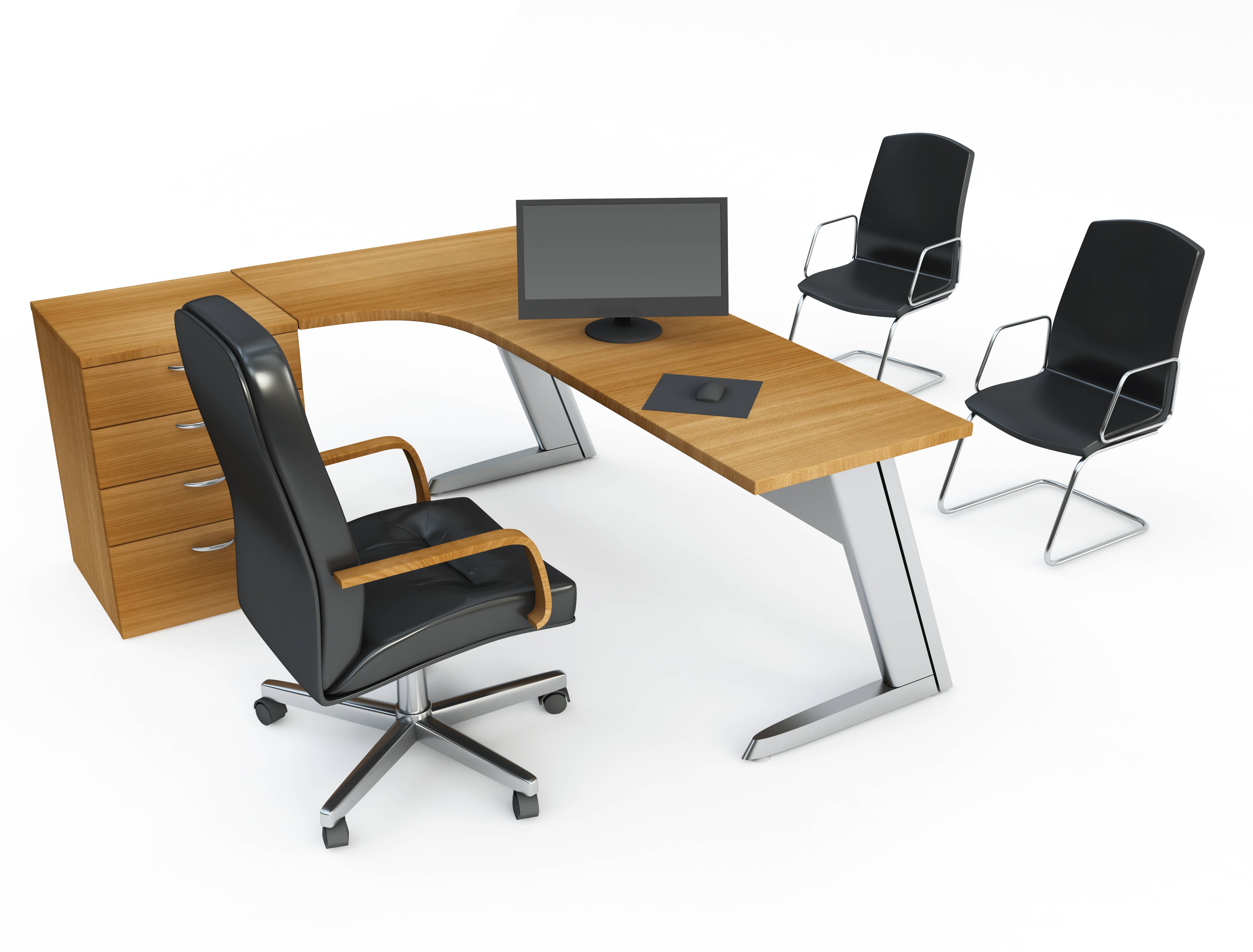
Whether we like it or not, the office desk is a workplace essential. It is where the computer sits, documents and stationery are kept, and most work is carried out. Even if you work from home, you are likely to spend much of your time sitting at a desk in your study.
Unless you work in a space-constrained environment, make the most of a large executive office desk with enough room to spread out comfortably across your immediate workspace. It will improve your efficiency, productivity and job satisfaction.
Exciting recent developments in office desk design have resulted in a wide range of options now being available. To help you choose the best executive desk for your needs, here are some key points to consider.
1. How Do You Work?
Perhaps the most important question to ask yourself when considering the purchase of an executive office desk is how you work. Do you work alone or as part of a team? How much privacy do you need? How often do you hold brief or impromptu meetings at your desk? Review the wide range of desk options available on the market and draw up a shortlist based on your requirements for physical space, privacy and teamwork.
2. What Are Your Workspace Requirements?
Once you have a clear understanding of how you work, consider the different office desk shapes that may be suitable for your workplace. A standard rectangular desk may be the best option for privacy and space. However, if you work in a collaborative environment, unconventional shapes such as L-shaped, P-shaped and U-shaped desks may be better suited to facilitating communication.
3. What Is Your Office Layout?
The desk you ultimately select must, of course, suit the overall size and layout of your office premises. A large, spacious office desk may not be suitable if you work in a historic cottage or a small modern office, or if you share the space with several colleagues. You do not want to work in a cramped environment without sufficient circulation space between items of office furniture.
Again, it is worth considering unconventional desk shapes that fit more easily into awkward corners or restricted interiors while still maximising your desktop space. An L-shaped executive desk, for example, can fit neatly around a corner, giving you ample workspace while leaving room for other desks.
4. What Is Your Budget?
There are many demands on your office budget. When purchasing office furniture, it is never a good idea to be carried away by sophisticated styles and materials if your budget simply does not allow for them. Instead, set a realistic budget and purchase the best-quality executive desk your company can afford. Once you know how much you are prepared to spend on an executive office desk, choose from the many attractive options available. For example, laminate and wood veneer can provide stylish, modern and cost-effective solutions. Solid wood and glass, on the other hand, are sophisticated, high-end executive desk options for offices that need to impress.
5. What Are Your Storage Requirements?
Are you an untidy worker or a minimalist? If you usually keep a large number of items on your desk—piles of papers, work files, stationery and so on—it may be worth investing in an executive office desk with built-in storage. Putting everything away neatly can help keep your desk clear and provide sufficient workspace, while ensuring that all your important documents are properly organised in a nearby storage unit or drawer. Look out for L-shaped and P-shaped executive desks, which often come with optional filing cabinets or overhead storage compartments.
Deja un comentario